Home »
» By Gareth Evans BBC News 5 hours ago Share this with Facebook Share this with Messenger Share this with Twitter Share this with Email Share Image copyrightGETTY IMAGES Image caption There are calls for Brett Kavanaugh to take a lie detector test as part of an investigation into alleged sexual misconduct In a secure basement room of the US Capitol building, senators are reading a secretive FBI report into allegations of sexual misconduct made against Supreme Court nominee Brett Kavanaugh. The contents of the report are not meant to be revealed, and there has been some criticism that the scope of the investigation has not been wide enough. Throughout the investigation senior Democrats have called for Mr Kavanaugh to take a lie detector test. One of his accusers, Christine Blasey Ford, has already done so. But how accurate are these tests? And how do they work? Let's start with the basics... What is a polygraph test? In short, polygraph tests record a number of different bodily responses which can then be used to determine whether someone is telling the truth. They usually measure things like blood pressure, changes in a person's breathing, and sweating on the palms. "The polygraph, like any other lie detection technique, measures an indirect effect of lying," says Dr Sophie van der Zee, who has expertise in forensic psychology and has researched deception for many years. "There's no human equivalent of Pinocchio's nose," she says. "But lying can increase stress... and with lie detection techniques you can measure the behavioural and physiological changes that occur when you feel stress." So polygraph tests do not measure deception or lying directly, but rather possible signs that a person could be deceiving the interviewer. This information is then used in conjunction with everything else that is known about the person to form a clearer picture of whether or not they are being truthful. The Brett Kavanaugh story in 300 words What will the FBI investigation do? Who are Supreme Court nominee's accusers? How are they carried out? Polygraphs have been used around the world, in countries such as Japan, Russia and China, but the technology and the process of a test remains largely the same. "There's a fairly long pre-test interview that lasts for about an hour," says Prof Don Grubin, who has trained polygraph examiners in the UK. "This focuses the individual on the questions they're going to be asked and tries to remove any outside distractions." This is followed by a practice test, which usually involves a number of straightforward questions. The aim is to relax the individual so they are comfortable and able to understand how the process works. Image copyrightSCIENCE PHOTO LIBRARY Image caption Polygraphs measure blood pressure, changes in a person's breathing, and sweating All questions are then agreed before the equipment is even attached. There are no curveball questions intended to catch the person off-guard. "There are no surprise questions because that in itself will trigger a response," Prof Grubin says. "What you're going to be asked is known." The equipment is then attached, and it usually includes a blood pressure monitor, electrodes which are placed on the fingers or palm, and two tubes which are wrapped around the chest and stomach. "There may be something that's put on the tip of the finger that records blood flow and we also use something called a movement detector which is on the seat and picks up if you're trying to beat the test," Prof Grubin explains. "You'll probably be attached to the equipment for 10-15 minutes but you'll be in the room for about two hours," he says. Interviewers ask a number of control questions during the test and then compare the responses to the key questions. It finishes with a post-test interview, where the person will be able to explain any responses they showed. The curious history of the lie detector Can you cheat? Yes, according to the experts. "There's no question that you can beat a polygraph test but you really need the training to do it," says Prof Grubin. "You see websites telling you how to, but the reality is if you just go in and take a polygraph while hoping to beat it then you're not going to." He says that it requires sitting down and practising with a trained examiner. But for those who don't have a qualified questioner to hand - what methods can work? "You might put a tack in your shoe which will cause, for example, a big increase in your sweating response," Prof Grubin says. "Any sort of muscular activity or movement because you need to sit still." "There are various drugs that people try but they tend not to be successful," he adds. But he cautions that most examiners will be able to spot any covert attempt to beat the test. Media captionPolygraph tester Deepti Puranaik put the BBC's Rajini Vaidyanathan through a lie detector test So do they work? The credibility of the polygraph was challenged almost as soon as it was invented in 1921, and there is much debate about its accuracy. Some experts say the fundamental premise is flawed. "It does not measure deception, which is the core problem," says Prof Aldert Vrij, who has written extensively on the subject. "The idea is that liars will show increased arousal when answering the key questions, whereas truth tellers will not. "But there is no sound theory to back this up." Dr van der Zee says that, because taking a lie detector test can be a stressful experience, it can sometimes present innocent people as guilty. "People being interviewed with a polygraph are likely to feel stressed. So whilst the polygraph is quite good at identifying lies, it is not very good at identifying truths," she says. Image copyrightGETTY IMAGES Image caption Washington officials experimenting with an early polygraph in 1922 But Prof Grubin says there are a number of different reasons why a test may be inaccurate. These include the questions being poorly formulated and the interviewer misreading the results. "If the examiner is well-trained, if the test is properly carried out, and if there's proper quality controls, the accuracy is estimated between 80%-90%," he says, adding that this is higher than the average person's ability to tell if someone is lying. However, he says that interviewing victims presents a separate problem. "Testing victims is a whole different ball game because of the nature of what they're being asked about, you would expect a lot of arousal anyway," he says. This means a victim, especially one recounting a traumatic experience, may appear as if they are lying because they are in an emotional state. Ultimately, experts say there are many caveats to polygraphs and a number of different factors which can lead to an inaccurate result. Related Topics US Supreme CourtBrett KavanaughUnited States Share this story About sharing Email Facebook Messenger Twitter Pinterest LinkedIn More on this story Brett Kavanaugh: The nomination and the allegations in 300 words 5 hours ago The curious story of how the lie detector came to be 21 May 2013 Video How a lie detector test works 12 September 2012 US & Canada Senate spars over FBI report on court pick 4 October 2018 From the section US & Canada Full article Senate spars over FBI report on court pick US police shooter was disabled war veteran 4 October 2018 From the section US & Canada Full article US police shooter was disabled war veteran Osaka cuts San Francisco ties over statue 4 October 2018 From the section US & Canada Full article Osaka cuts San Francisco ties over statue More Videos from the BBC 'Groomed aged 13 by hundreds of men on Kik' Why students want to ban clapping Fighter jets land on HMS Queen Elizabeth Snow leopard's surprise at new camera Trump: I'd be the world's worst drinker Baggage handler filmed lobbing luggage Recommended by Outbrain Elsewhere on BBC BBC News Walkers lost in snow in 'gym clothing' BBC Culture Cultural Calendar BBC News Hundreds told of partner's abusive past Recommended by Outbrain You Might Also Like BBC Future How the pill changes your body shape BBC Travel An ancient engineering feat that harnessed the wind BBC Future The surprising truth about loneliness From Around the Web Selfie Drone is Putting Drone Companies Out of Business in Bangladesh. breakthroughtrend.com What Are The 10 Biggest Tech Companies In The World? Trendingstock Today Use This Simple Trick To Protect Your Computer For Free www.the-review-experts.com A Modern Duplex in a Historic London Spot—With Garden Access Mansion Global (2018) Top 10 Antivirus Of The Year - #1 Now Free. My Antivirus Review Week in Review: Luxury, Liz and London Mansion Global Promoted content by Outbrain
In a secure basement room of the US Capitol building, senators are reading a secretive FBI report into allegations of sexual misconduct made against Supreme Court nominee Brett Kavanaugh.
The contents of the report are not meant to be revealed, and there has been some criticism that the scope of the investigation has not been wide enough.
Throughout the investigation senior Democrats have called for Mr Kavanaugh to take a lie detector test. One of his accusers, Christine Blasey Ford, has already done so.
But how accurate are these tests? And how do they work? Let's start with the basics...
What is a polygraph test?
In short, polygraph tests record a number of different bodily responses which can then be used to determine whether someone is telling the truth.
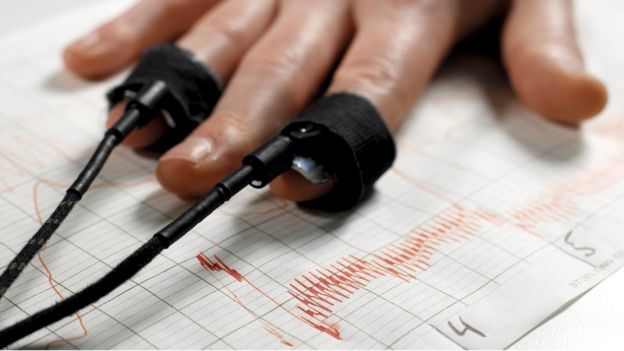
They usually measure things like blood pressure, changes in a person's breathing, and sweating on the palms.
"The polygraph, like any other lie detection technique, measures an indirect effect of lying," says Dr Sophie van der Zee, who has expertise in forensic psychology and has researched deception for many years.
"There's no human equivalent of Pinocchio's nose," she says. "But lying can increase stress... and with lie detection techniques you can measure the behavioural and physiological changes that occur when you feel stress."
So polygraph tests do not measure deception or lying directly, but rather possible signs that a person could be deceiving the interviewer.
This information is then used in conjunction with everything else that is known about the person to form a clearer picture of whether or not they are being truthful.
Polygraphs have been used around the world, in countries such as Japan, Russia and China, but the technology and the process of a test remains largely the same.
"There's a fairly long pre-test interview that lasts for about an hour," says Prof Don Grubin, who has trained polygraph examiners in the UK. "This focuses the individual on the questions they're going to be asked and tries to remove any outside distractions."
This is followed by a practice test, which usually involves a number of straightforward questions. The aim is to relax the individual so they are comfortable and able to understand how the process works.
All questions are then agreed before the equipment is even attached. There are no curveball questions intended to catch the person off-guard.
"There are no surprise questions because that in itself will trigger a response," Prof Grubin says. "What you're going to be asked is known."
The equipment is then attached, and it usually includes a blood pressure monitor, electrodes which are placed on the fingers or palm, and two tubes which are wrapped around the chest and stomach.
"There may be something that's put on the tip of the finger that records blood flow and we also use something called a movement detector which is on the seat and picks up if you're trying to beat the test," Prof Grubin explains.
"You'll probably be attached to the equipment for 10-15 minutes but you'll be in the room for about two hours," he says.
Interviewers ask a number of control questions during the test and then compare the responses to the key questions. It finishes with a post-test interview, where the person will be able to explain any responses they showed.
"There's no question that you can beat a polygraph test but you really need the training to do it," says Prof Grubin.
"You see websites telling you how to, but the reality is if you just go in and take a polygraph while hoping to beat it then you're not going to."
He says that it requires sitting down and practising with a trained examiner. But for those who don't have a qualified questioner to hand - what methods can work?
"You might put a tack in your shoe which will cause, for example, a big increase in your sweating response," Prof Grubin says. "Any sort of muscular activity or movement because you need to sit still."
"There are various drugs that people try but they tend not to be successful," he adds.
But he cautions that most examiners will be able to spot any covert attempt to beat the test.
So do they work?
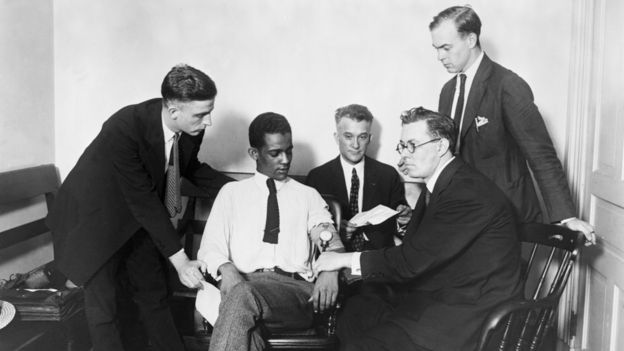
The credibility of the polygraph was challenged almost as soon as it was invented in 1921, and there is much debate about its accuracy.
Some experts say the fundamental premise is flawed.
"It does not measure deception, which is the core problem," says Prof Aldert Vrij, who has written extensively on the subject. "The idea is that liars will show increased arousal when answering the key questions, whereas truth tellers will not.
"But there is no sound theory to back this up."
Dr van der Zee says that, because taking a lie detector test can be a stressful experience, it can sometimes present innocent people as guilty.
"People being interviewed with a polygraph are likely to feel stressed. So whilst the polygraph is quite good at identifying lies, it is not very good at identifying truths," she says.
But Prof Grubin says there are a number of different reasons why a test may be inaccurate. These include the questions being poorly formulated and the interviewer misreading the results.
"If the examiner is well-trained, if the test is properly carried out, and if there's proper quality controls, the accuracy is estimated between 80%-90%," he says, adding that this is higher than the average person's ability to tell if someone is lying.
However, he says that interviewing victims presents a separate problem.
"Testing victims is a whole different ball game because of the nature of what they're being asked about, you would expect a lot of arousal anyway," he says.
This means a victim, especially one recounting a traumatic experience, may appear as if they are lying because they are in an emotional state.
Ultimately, experts say there are many caveats to polygraphs and a number of different factors which can lead to an inaccurate result.





0 মন্তব্য(গুলি):
একটি মন্তব্য পোস্ট করুন